This site uses cookies to provide you with a great user experience. By using BondbloX, you accept our use of cookies.
Bond Market News
US-Israel-Iran War: Impact on UAE Real Estate Developers Dollar Bonds
March 27, 2026
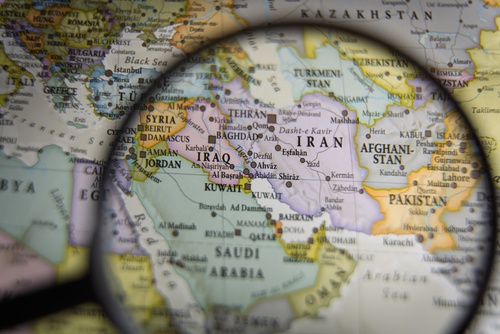
March 27, 2026: Dubai-based luxury developer Omniyat pushed back against a potential Fitch downgrade, by highlighting that its liquidity position is strong. As of December 2025, the company held over AED 5.3bn ($1.44bn) in total liquidity. This included AED 2.7bn ($740mn) in unrestricted corporate cash, which was further boosted by a AED 2.2bn ($600mn) sukuk issued in March 2026. It claims this is enough to cover its next major debt obligation — a $500mn 8.375% sukuk due 2028 without needing new sales, collections, or refinancing.
Last week, Fitch placed Omniyat’s BB- rating on Rating Watch Negative, citing geopolitical risks from the Iran war. This risk emanating from the war could dampen housing demand in Dubai, increase unsold inventory, and raise cancellation risk across the Gulf region, its analysts noted. Omniyat’s overall debt profile comprises three sukuk totalling $1.5bn, with near-term bank debt maturities of only ~AED 60mn ($16.3mn) in 2026 and ~AED 150mn ($40.8mn) in 2027. Omniyat’s dollar sukuk have dropped by almost 10 points across the curve since the start of the US-Iran war and continue to trade volatile.
March 17, 2026: Dollar bonds and sukuk of UAE-based property developers such as Omniyat, Binghatti, Arada, Sobha Realty and Damac fell again in yesterday’s trading session. As per a Bloomberg index, UAE corporate bonds are the worst performers in the emerging markets space this month, amid the war in the Middle East.
Some analysts noted that the residential real estate market was already looking vulnerable before the war started, warning that prices and rental yields could fall because of a surge in supply. Others see the current drop as a mild correction with investors expected to focus on good quality, tier-one names.
Manuel Mondia at Aquila Asset Management said the market was possibly focused on “the two most-levered names”, referring to Binghatti and Omniyat. He added that these “might see more trouble down the road”. Fitch recently placed Dubai’s Binghatti on watch for a possible downgrade. However, Binghatti noted that it had a strong financial position, with conservative leverage and ample liquidity.
March 6, 2026: After an initial sell-off earlier this week due to the US-Israel and Iran war, dollar bonds of property developers in the Middle East have recovered some of the losses. The week began with a strong negative sentiment in global markets with investors flocking to haven assets. In the midst of this, dollar bonds of gulf property developers fell by as much as 4-5%. However on Thursday, their bonds rallied and have partially recovered the move.
March 3, 2026: Middle East property developers’ dollar bonds have come under pressure this month amid the escalating geopolitical tensions. The joint US–Israel strike on Iran’s Supreme Leader Khamenei has heightened fears of prolonged instability. This has pushed investors toward safe havens like US Treasuries and gold. In retaliation, Iran conducted missile and drone strikes across the gulf, impacting nations like the UAE, Saudi Arabia, Qatar and others. Amid this backdrop, bond prices of property developers across the UAE and Saudi Arabia have seen a signifcant impact. For instance, Sobha Realty’s 2030s fell by 5.7% and Binghatti’s 2030s sold-off by 4.5%. Even investment-grade names like Emaar and Aldar have seen modest declines. Analysts note that while real estate prices have not yet seen a major drop, sustained uncertainty could moderate demand, particularly among foreign buyers and investors.
Go back to Latest bond Market News
Related Posts:
High-Yield Bonds Lead The July Recovery
August 6, 2018
Bond Yields – Explained
December 26, 2024

What to Look for When Buying Bonds
December 4, 2024







BondbloX Pte. Ltd. is regulated by the Monetary Authority of Singapore as a Recognised Market Operator ("RMO") and exempted from Section 49(1) of the Securities and Futures Act (Cap. 289) ("SFA") under Section 49(7) of the SFA.