This site uses cookies to provide you with a great user experience. By using BondbloX, you accept our use of cookies.
Featured Article
The Uncanny Resemblance Between Wine and Bonds - Two Sides of the Same Coin
Jan 11, 2026
This article is about the similarity between wine and bonds — outwardly two very different things! I've been wanting to write this article for many many years, typically around Christmas time in December as the bond market starts to wind down for the year and the season for drinking wine kicks off in ernest. One of the motivations for writing this article is a coincidence that the BondbloX Bond Exchange (BBX) shares its name with the Berry Brothers secondary wine exchange which is also called BBX. Before I go any further, I do want to say that this particular article is written mostly for merriment, mirth and good cheer rather than anything particularly special.
For both wine and bonds, geography is very important. There are some people who would only like to drink wine from France or Australia; some others are even more particular and will be partial to a sub-region like Burgundy or Brunello. Likewise in bonds, in my experience, there's a lot of home bias: a preference for bonds from the country that you live in or belong to or are most familiar with. At BondbloX, we often joke that if you show us a person's bond portfolio, we can tell you his life history. In both wine and bonds, a lot of debate comes up about “the best value” and that changes from time to time— new world vs. old world; emerging markets vs. developed markets.
Something that doesn't come to mind as a similarity in both these asset classes (yes, I will certainly call wine an asset class) is term structure or vintage. Funnily enough, it works in opposite ways for wine and bonds. In wine, the year of production i.e. the “year of issuance” is important whereas for bonds, it's the maturity that takes precedence. Maturity has a totally different meaning for wine!
A key similarity is the excitement created from the new issue process in bonds or the En primeur for wine. The intermediaries in both industries, négociants for wine and dealers for bonds, will analyse the new vintage or the new issue, enticing buyers, espousing better value than anything else available in the secondary market. Both merchants use similar adjectives such as scarcity, appreciation potential, and bring out fine points to show better relative value, both against the same producer (issuer) and against other similar producers (issuers). Phrases like “cheapest first growth in the market”, “some new issue concession on the table”, or “35bps pick-up vs. fair value at IPG” are bandied about. Another identical term in both is ‘allocations’. This particular word is very specific and makes the buyer feel special. Relationships are carefully maintained, and skilled negociants will always claim ties with great vineyards going back generations. Once the precious allocations are obtained, expectations of price appreciation follow—almost immediately in the case of bonds, and over the years in the case of wine. Medieval urban legend has it that an English gentleman would always buy two cases of fine claret en premeur, and upon maturity (of the wine), sell one case and enjoy the other for free. I too emulated them by purchasing two cases of the 2001 vintage, my older daughter's birth year, during the wine boom in the early 2010s. Sadly, they are still below purchase price well over a decade later. The good part about bonds is that the decent ones will always trend towards the par value as you approach maturity!
The next interesting similarity is about tiers: We have Tier-I and Tier-II bonds, some readers may remember the time that we had Tier-III bonds as well. Similar tiers also exist in wine. Emperor Napoleon III in 1855 created a five Tier classification of the wines from Bordeaux based on the price, reputation and quality; this tiering still holds true and is almost unchanged, with Château Mouton Rothschild being promoted to the top echelon in 1973. In Burgundy’s hilly terrain, the finest parcels lie at the top of the hill as Grand Crus, followed by Premier Crus on the side slopes just below, and village wines at the foothills. As you can see, within the same village, a seniority exists akin to a perpetual bond, Tier- II bond, and a senior bond. We know that while the name is the same on the bottle or the bond, the price & quality are very very different. All Meursaults, Corton, Margaux are not the same — there is a perceptible difference between the legendary first growth Chateau Margaux, classified Premier Grand Cru Classé and the other wines from the Appellation of Margaux. Likewise, the buyers of the Credit-Suisse’s bonds regrettably found out in 2023, that all their various classes of bonds were not the same. While the AT1 holders were written off, the others got paid out in full.
Continuing our journey, once you have obtained the allocation for the wine and the bond, you settle into a rather long wait for maturity. The aforesaid Chateau Margaux, produced in 2020, has a drinking window from 2033 to 2075! If you drink it earlier, the fine wine police can arrest you for wine-fanticide. The key thing to do during this long wait is to have it stored perfectly. In my personal opinion, how wine is stored is super important. Wine is a food product, and even brief periods of temperature fluctuation can irreparably spoil it, stripping away many of its fine notes and, in extreme cases, turning it into vinegar. Now the best place to store it is inside a hill, in a cool place where the temperature remains naturally stable. How you store or safekeep bonds is also very critical —the two main features to look for are segregation and bankruptcy remoteness. If your bonds are custodized with a large global custodian, they are safe and you should have peace of mind. Once assured of safety, cost becomes another concern. You have to pay an annual cost, which may be a small fee and in some cases,a not-so-small fee. At BondbloX, we decided to waive the custody fee for any client with more than USD 5 million in assets with us. For wine, these costs can be a dollar or two per year, so they do add up over the decades.
Next I want to turn towards the nature of secondary trading of these assets. For both wine and bonds, the same case or ISIN can be quoted at two different prices (albeit not very substantially different). You may have a negociant or a dealer who sells you a case of wine a couple of hundred dollars more than another dealer. You have the option to buy wine from local shops or from global suppliers. If you go out and ask three or four different brokers, you'll get two or three different prices. If you're sure about the provenance of the wine, just buy from the cheapest. The provenance does matter — for instance, I never buy wine from expats leaving a country and selling their collection at cheap prices, as I cannot be certain how the wine has been stored. In bonds, as long as you're buying from a regulated player, it's really the price that matters the most. I think managing to buy at a good price saves you a lot of money. In both these industries, having a good relationship with the dealer is useful - probably more for bonds than for wine! This is very unlike the equity market where everyone gets the same prices via stock exchanges. If I want to buy a stock of Tesla or HDFC Bank or Apple, my relationship with my broker doesn't matter as I will always get the same price.
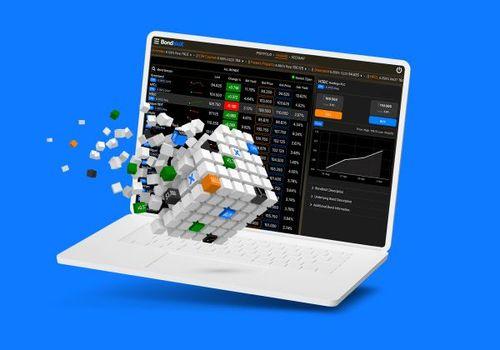
In recent times, both of these industries are changing with the advent of electronification. The old image of a wine merchant having great relationships with the best producers in Europe is slowly giving way to vineyards (particularly in the US and the new world) having direct relationships with their retail clients and a number of very reputable wine websites that are able to supply wine globally. Likewise for bonds, from a very phone driven market, electronic market places like BondbloX and a few others are allowing increasingly direct and efficient access to bonds globally.
There is one last connection and a more personal connection between wines and bonds. BondbloX is the world's first fractional bond exchange. Our clients often ask if we have fractionalized all bonds in the world and I say no! Today, you can buy about two or three thousand bonds in minimum denominations of USD 1,000 on our exchange. The analogy I use is that if you go to a large wine bar or restaurant, they may have many hundreds of wines by the bottle, but only a dozen available by the glass.
I sign off with the wish that both your wine and your bond investments give you decades of pleasure, in both possession and consumption, and that you continue to find great value in BBX, the BondbloX Bond Exchange!
Rahul Banerjee
Founder & CEO, BondbloX
Announcements









BondbloX Pte. Ltd. is regulated by the Monetary Authority of Singapore as a Recognised Market Operator ("RMO") and exempted from Section 49(1) of the Securities and Futures Act (Cap. 289) ("SFA") under Section 49(7) of the SFA.